2015/08/06

Day 149: The Breakfast Club (August, 5)

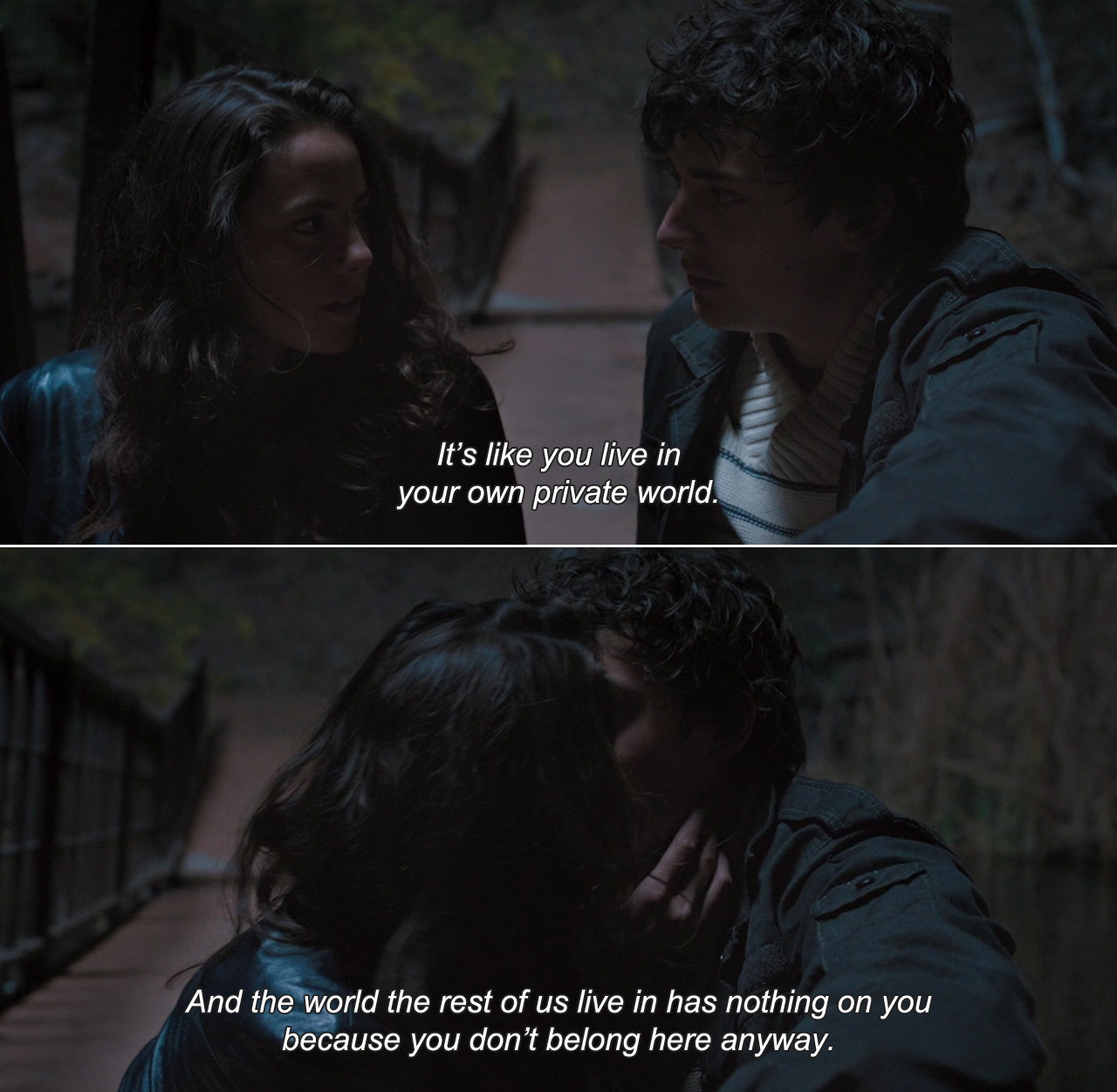
The first time I've seen The Breakfast Club was with my dear and old friend Pan (one of my dearest and older friends btw) during an English class. Her teacher at the time allowed me to his class, invited by her, to see this movie that we've heard so much buzz about, but never had the chance to watch it. The squared city where I live was a ghost town at the '80s, so usually many films didn't show at the theaters here. We used to talk about The Breakfast Club at school, with another cinephile friend - that actually became a filmmaker and photographer (Hello, Neném), and  could not wait to see it. So, at a hot afternoon after school, both of us were on our way to see The Breakfast Club. And it as enthralling, despite the fact that I didn't understand one word that was being said.

This way, when the movie got three special showings on this week, Pan, Dea (another dearest and oldest :) and I immediately arranged to meet at the theater to finally see it properly. But the universe is a cruel master (I'm not overreacting, I promise), and a sore throat prevented me to be with them. I'm nothing but persistent when movies and friends are involved, and so I decided to see the movie at home, at the same time of the theater's screening. Pan texted me "it's on!". So I turned on the DVD player and began to see this beloved movie for the millionth time. Not before telling them to have fun and, of course, "Don't you forget about me" :)

Among many and many good teen movies, from the '80s or from the current times, The Breakfast Club is by far my favorite. I'm very sure of that, even if it's usually difficult to me to ascertain such preferences. I like too many things for different reasons, and pointing a sure favorite is not easy. However, in this case, I've absolutely no doubt. Thirty years have passed since its premiere, still TBC is not old to me, at least yet. I start to cry in the Bowie's quote, with the Anthony Michael Hall's voice narrating, and end it in the same way, with tears on my eyes in front of  Judd Nelson's raised fist. Too many remembrances, I guess. And recognition. 


"And these children that you spit on
As they try to change their worlds
Are immune to your consultations
They're quite aware of what they're going though"
And let's try to not forget that. Never.


It is odd how this movie is still relevant to me, even in a different time and place from that first one, at a small class in a English school, in a squared city in the middle of Brazil, with my best friend in the world and high expectations. It is not a surprise that I still care to get emotional. 

After the synchronized screenings, we were texting each other. How the view about teenage years is accurate despite the diferent times. How How Allison is a version of Dea (it never ceases to amaze me), how some things are different from what the girls remembered. Pan thought it was pretty slow. Dea didn't remember seeing it at all. And I was here, at home, with tears on my eyes, happy that, despite so many changes and all the growing up stuff, what never changes is how this amazing two friends are fundamental in my life. And, along with them, there are all the movies that help to tell the story of our precious and cherished friendship. 


The Breakfast Club. Directed and written by John Hughes. With: Judd
Nelson, Emilio Estevez,  Molly Ringwald, Ally Sheedy, Anthony Michael
Hall. USA, 1985, 97 min., Dolby, Color (DVD).


PS: There are some interesting facts about this production according to the trivia on imdb.com. I've read before about John kapelo's jocking about Martin Sheen in Apocalypse Now without knowing he's Emilio Estevez's father, and here the story is more detailed.  How the movie has been present in our imaginary we can see by its many connections and references, also on imdb.com.

PPS: Another production about high schoollers that I loved was the TV show Dawson's Creek. There's a good episode at season 1 referring to The Breakfast Club:




2015/08/04

Day 148: Rapture-Palooza (August ,4)

The world got to its end many and many times on movies. It's not countless, but it could be, because big is the number of films about the end of the world. Meteors, aliens, viral infections... well, you list the catastrophe and probably there will be a movie about it. 

Rapture-Palooza ends the world by a biblical event - the Rapture. It could just be one of those dumb comedies that I don't care much about if not for a few elements, presented in a trashy yet smart way. And the movie makes a maddening soup with them. First, the title sequence is good. Second, Anna Kendrick is the narrator, and what could be trashy and silly, becomes witty under the views of her character about the world under its apocalypse. She and her boyfriend are very matter-of-fact. Another interesting aspect here is how many biblical events are recognizable in a funny way. The usual silly stunts of such comedies are there, but under a ironic and smart view - what makes the difference here actually. I wasn't laughing loudly much (the return of one of the ruptured at the beginning was one of a few exceptions), but was mentally nodding to some of them. The best are the foul-mouthed crows. 

And so, what in Stephen King, for example, is a scary fight between good and evil, here it is just the world getting along with its end - something that can change, though, when the forces behind it are surprised by a fearless and clueless couple.  

One last comment: Just in case you are thinking to see this movie around younger viewers, it is not rated R by chance. It doesn't look offensive at first, but there's a lot of really really really trashy talking (especially by The Beast, the evil idiot). 


Rapture-Palooza. Directed by Paul Middleditch. With: Craig Robinson, Anna
Kendrick, John Francis Daley. USA, 2013, 85 min., Color (Cable TV).


PS: Fragments: True Detective, season 2, episode 7; Remember Me, 2010. 

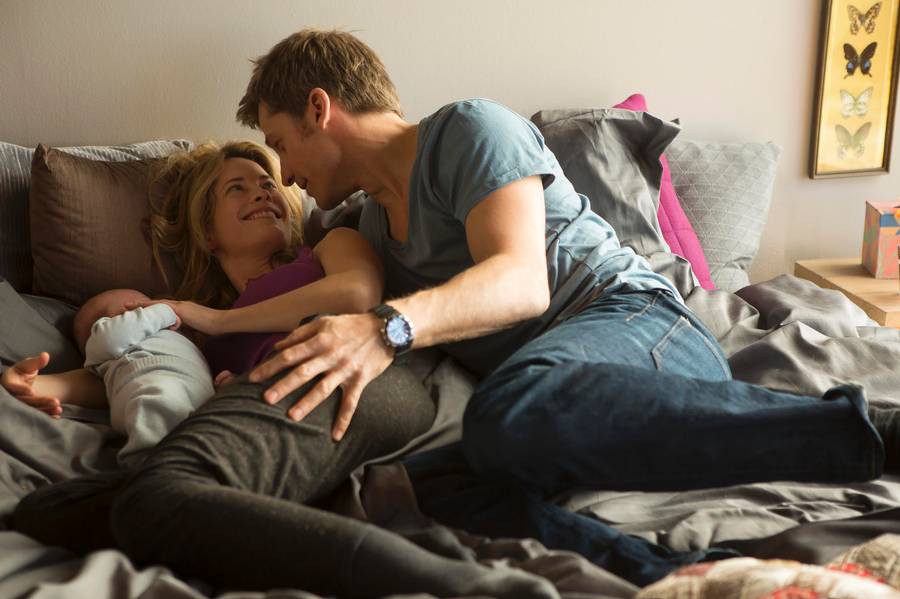
Day 147: The Truth about Emanuel (August, 3)

Lazily couch potatoing in front of the TV, I decided to go through The Truth about Emmanuel till the end. At that moment, by the way, during the final credits, my main thoughts were that this movie could have been a nice indie film if it wasn't so mainstream. Does that make sense?

The thing is, if the production had chosen a more poetic way of telling this story, it would have been actually beautiful. People in pain, surrounded by madness and loss, have a way to look for their equal. A mirror is a path to overcome a suffering so big that turns out to be the most efficient prison in the world. This movie is about two women confronting losses that  end up being complementary in a way that the universe is a master to achieve. As I've said, it would be a beautiful movie if it had not opted to stay between a delicate story about two people lost in their own pain and a mystery thriller, which resulted only in an efficient way to waste a good story. 


The Trugh about Emanuel. Directed and written by Francesca Gregorini,
from the story by Sarah Thorp and Francesca Gregorini. With: Jessica
Biel, Kaya Scodelario, Alfred Molina. USA, 91 min., Color, 2013 (Cable TV).


Day 146: The Lunchbox (August, 2)

Each community has its own social mechanisms, and it is not a surprise that India would present to the world such a lunatic and amazing system as the Dabbawala, the Mumbai's famously efficient lunchbox delivery way. Dabbalawa was created 125 years ago, at 1890 (thanks, wikipedia), and has a history of few failures and erros. There are so many studies about it, Prince Charles had recognized its efficiency... but of course cinema would look at this crazy system with more humane eyes.

The not so exact estimate is that this apparent erratic delivery system has an error in 6 to 8 milliion deliveries. Of course, the storyline of The Lunchbox (Dabba, a 2013 Bollywood production, relies in one of its rare failures. A caring, lonely and hopeful wife sends her new culinary adventures to her husband in a lunchbox, in order to reach his cold and desinteresded heart by the stomach. But the food reaches another of the many Mumbai's working men. And so, thanks to the Indian Gods of Bollywood that it happened like that. 

Another important assumption in this movie is the saying by which "the wrong train can lead you to the right station". By this rightful error, two individuals lost in the nonsense  of their own lives find meaning and hope of better days with each other. They are connected by food, a wonderful way to unite people, and by their loneliness, despite the people around them. 

Life can be a picture of this wrong train that leads us to a lot of right station, better sayin, the people that five sense to this crazy journey.

The characters in this movie are so real, so close, so endearing that I went through the whole filme like it was a lullay and I was being cuddled by such a delicate story. I don't know how to explain that exactly, but there's somehting about such real characters in a movie that never fails to break my heart and bring tears to my eyes. Despite being also funny (thanks mostly to the persistent Shaish) and sweet, I wasm ovied by The Lunchbox since the beginning til its unbelievable end. So much life in its amazing details, it is impossible not to get at least a bit emotional here and there. A lovely movie wiht belove characters.


The Lunchbox (Dabba). Directed and written by Ritesh Batra (With hindi
dialogues by Vasan Bala). With: Irrfan Khan, Nimrat Kaur, Nawazuddin
Siddiqui.  India/France/Germany/USA, 2013, 104 min. Dolby Digital,
Color (Cable TV).


PS: Penny Dreadful, season 2, til the heartbreaking end. 

PPS: When Ila tries to explain to the Dabba deliveryman that there has been a mistake, he says that she is the wrongful one. After all, they are talking about a system validated by Harvard and the "king" of England. Not a small feature, right? But this scene annoys the hell out of me, because the despising ways by which the guy alludes to the woman's complaint is a small but very effective dose of the lack of a female voice and respect in India and, course, in general. 


PPPS: I was so suspicious of being caught by another too-painful-to-stand movie that I've asked two friends about The Lunchbox before choosing to see it in this sunday night. Thanks to Sá e Kal, I've reached this incredibly sweet and delicate story.


2015/08/01

Day 145: The Seventh Continent (August, 1st).

In the last post, I (along with Rodrigo) emphasized how a story may be harmed by an over explanation. But, sometimes, what we see is the total lack of explanations because there's no way to explain somethings. Maybe that's why we cannot clearly see the characters here at the beginning - they and their lives and reasons are not truly recognizable to us. 

In the everyday life, each little detail has a part on our perception of life, even if we are used to pass through our routine without noticing them. The key that ignites the car. A cereal absorbing the milk. A faceless person near us waiting for a doctor appointment. And so things go on, life goes on, we go on. Until we don't care to keep going anymore. There's a million ways to stop caring or even being able to endure it. Mikael Haneke, in The Seventh Continent (Der Siebent Kontinent), his debut feature film, shows us one of this ways, based on a real family, and he does that in a surgically manner. But despite an aseptic view, this movie is a emotional punch on the stomach - and my reactions to it were truly physical.  

I've seen the same happening with people near me´(sorry if I cannot be more explicit, but believe me, I'm talking about something really sad and hurtful). It is horrid. And we try to explain, to reach a reason for such a choice, but there's none. Every explanation is futile, and Haneke is a master in telling us that. Judgement is not useful here also. 

After the last scene, I turned off the TV and looked around me. Nothing made sense for a few minutes. Slowly, life was infused into me again, but I'm still in a suspended state, one that allows me to notice every detail. The meat that I was slicing for dinner (one that I'm guessing I wont be able to eat). My fingers tapping the computer keys. Distinct sounds outside my window. My head throbbing after such a hard journey. I think it will take a while longer to go back to an less disturbed sense of life.

This week with movies wasn't easy. First, the dreadful tragedy of Oldboy... after, the nonsense of A Second Chance, and, now, a life that we can judge ordinarily good, but that is anything but. Still, it is just because of a deeper sense of life that I have chose to spend a big part of my time with cinema and its amazing films, isn't it? And more is coming, I'm sure. 


The Seventh Continent (Der Sibient Kontinent). Directed by Michael Haneke.
With: Birgit Doll, Dieter Berner, Leni Tanzer. Writers: Michael Haneke,
Johanna Teicht. Austria, 1989, 104 min., Mono, Color.

Day 144: A Second Chance (July, 31)

I absolutely love Susanne Bier's After the Wedding and In a Better World. I try to keep track with her career as a movie director because of those two, but it is not always easy. 

A Second Chance (En Chance Til) was a confusing movie for me. Its subjects and performances are great, but a problem is presented by its main plot: could someone act like that, even in a time of despair? Rodrigo and I were questioning the plot from the start, criticizing characters and storyline. To say the least, we were pretty angry in fact. I understand how an author can loose his hand in telling a story, becoming more of a lecturer and less intuitive in the course of their careers. It is always a sad thing to witness, though. 

Still, in the course of this Denmark/Sweden 2014 production, we were more or less able to leave this behind in order to focus on what was being debated there, and it was a lot. The glue to all the subjects were how humane they all were. And so we decided to move away from the incongruous plot and listen to what was being said behind it. 

It reminded me Lionel Shriver's must read We Need to Talk About Kevin (The movie didn't get to the point, I think). The pursuit for a perfect life, a perfect family, the need to achieve that can overcome more fundamental and urgent needs, such as the awareness of what is really happening inside our private and familiar environment. This pursuit can seriously blind us. Not look at that with open eyes can lead to tragic events, as we see in Shriver's story and in this one. Pretend that everything is perfect, especially when what is visible to the eyes is pretty amazing, is a sort of crime, with dreadful results. 

One of the lessons here is: it can hurt to look at our true lives with clear and honest eyes, but pretend that everything is ok can be even more hurtful. 

Other aspect: to act under despair is also a guarantee for tragedy. We cannot take care of others' troubles - we can help, but not overcome them for those we love. The attempt to achieve that is humane, of course, but very stupid at the same time. In this movie, Nikolaj Coster-Waldau's Andreas excels in stupidity in a masterful way (I said we were angry). Slowly, we are able to relate to his reasons, but we never cease to question it. What he does is horrid, with terrible consequences for himself and others, and the fact that he acts like that under false pretenses (even if he is not aware of it) is even worse. 

Reading this post, I'm feeling very judgemental, something that I try not to be most of times - if Andreas had been able to be less prejudiced, maybe he would have acted differently actually. Don't get me wrong, I understand his reasons actually. But, as I've said, the very premise of this storyline is moot, making judgement very easy. And its is even easier when we realize what Susanne Bier is defending here - at the end, i becomes clear that she shares some of Andrea's more judgemental features, even if she presents the  great mess that these ideas can cause. 

Our passionate reactions to the movie is a reflect of how it is relevant and deceptive all at once. We could not stop talking about what we were seeing, in great disbelief. At the end, though, I think we were less angry, more sensitized to Andreas's quest. At least until the awfully cheesy last scene, a doomed tentative of a redemptive lesson. What a waste, when we were finally getting along with this tragic and very humane story. 


A Second Chance (En Chance Till). Directed by Susanne Bier. With:
Nicolaj Coster-Waldau, Urish Thomsem
(from Adams Aebler), Maria Bonnevie.
Denmark/Sweden, 2014, 102 min., Color 


PS: Admission, 2013; Penny Dreadful, Season 2, episode 6, and others that I cannot remember anymore... too much television for a weak memory :)

Day 143: Bad Words (july, 30)

I saw Bad Words by chance, at cable TV, still in the morning, while browsing channels for a good movie to have breakfast with me. What called my attention mostly were the first lines and how sober they were, reinforced by a classical soundtrack:


"I'm not good at a lot of stuff. Especially thinking things through. And that's why this plan was so shitty. But my feelings were hurt, and I'm glad I at least did something about it. Making bad decisions is nothing new to me. After all, I live alone at 40, and I make my leaving proofreading products warranties. A few weeks ago, I took a  break from that however, so I could do this whole thing. And it's pretty ironic that what I did  was exactly what a child would do. I threw a tantrum just to get attention."

And that is what Guy Trilby is: a child in a 40 years old man body. They are not so rare, if you are smirking at him right now. A lot of us are still carrying our childhood matters daily, without even noticing. Decisions and choices are made by this hurt kid, and we are not aware of that. One day, Guy decides to act in order to remedy that. As he said above, his choice of way might not have bee the better one, but it was effective. 

That's why a sometimes silly comedy, with trashy aspects, was so endearing to me. Despite the goofy elements, its somber tone is a constant, the characters became less stereotyped at each passing minute, and I wasn't able to turn off this small movie, Jason Bateman's directional debut on features. I've read after some comments defending that this movie is racist and misogynist. I think the main character is all that, not the film, that goes just on the opposite directions. Of course, it does that with a lot of cliches, but that doesn't compromise the characters quest and its relevancy - elements that made me care for him and what was going to happen. Not a bad quality to a story, after all.


Bad Words. Directed by Jason Bateman. With: Jason Bateman, Kathryn
Hahn, Rohan Chand. Writer: Andrew Dodge. Us, 2013, 89 min., Dolby
Digital, Color (Cable TV).


PS: Fragments: Penny Dreadfulhttp://www.imdb.com/title/tt2628232/?ref_=nv_sr_1 season 2, episodes 3 and 4 - I seriously hope that Eva Green gets a bigger salary than the rest of the cast... her work is not easy, and she does it beautifully.